What flamenco is made of
Cante, baile and toque explained
Flamenco is song, dance and guitar working together. What cante, baile and toque each do, and what jaleo and compás add, before you watch a show.
Book the palace flamenco show ↗Quick answer
Cante means song, baile means dance and toque means guitar-playing, and UNESCO's entry treats flamenco as the three fused into one art. Compás, the rhythmic cycle, holds them together, and jaleo, the clapping and calls, encourages the performers. A show with dancers, singers and guitarists, such as the one at the Marbeuf Palace, puts all three in one small room.
Three parts, one art
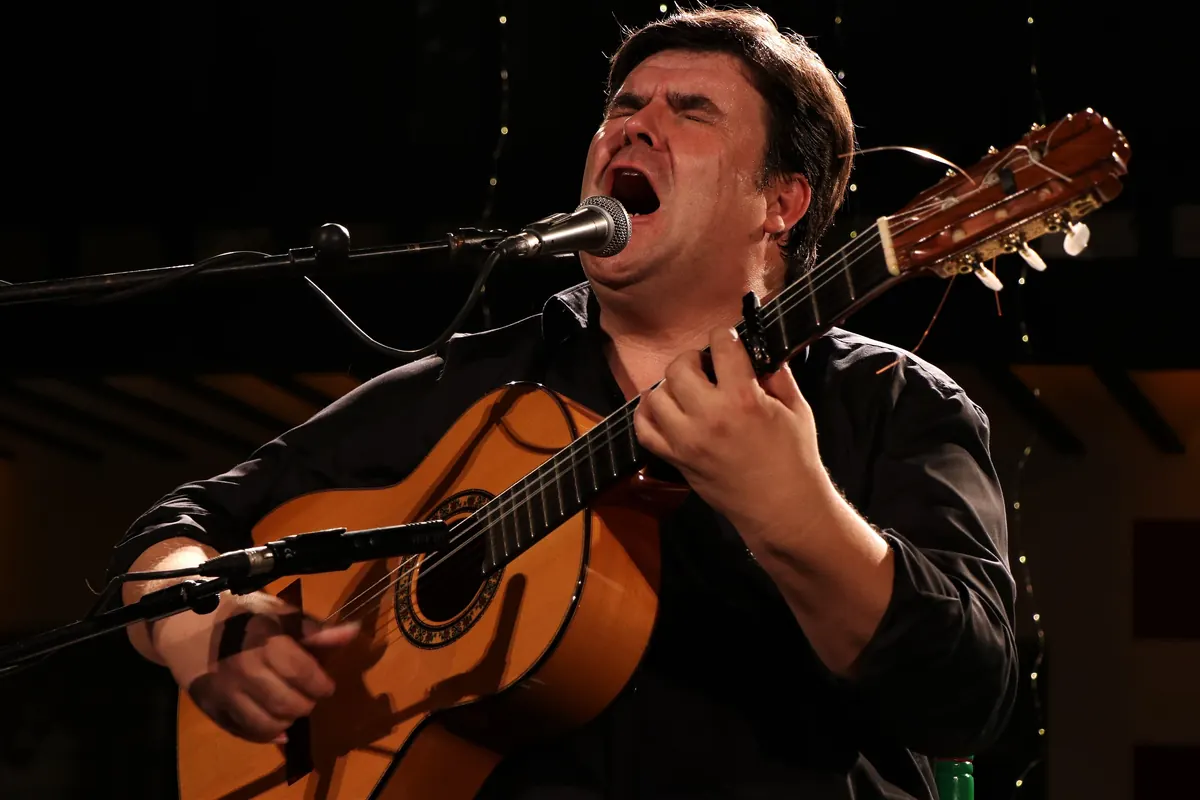
UNESCO's entry for flamenco describes it as an artistic expression fusing song, which it calls cante, dance, called baile, and musicianship, called toque. The three are not separate acts that take turns. They work together, and in a close room you can follow one leaning on another: the singer's phrase sets the dancer's pace, and the guitarist answers both. UNESCO also notes that castanets, hand-clapping and foot-stamping can join them. The sections below take each part in turn.
Cante: the singing
A flamenco singer is a cantaor, according to Wikipedia. The Royal Spanish Academy, which Wikipedia quotes, defines cante as the action or effect of singing any Andalusian singing. The deepest, most serious tier of flamenco song is called cante jondo, which means deep song. Wikipedia says the siguiriya is the song type at its core, citing the composer Manuel de Falla, and ties the tradition closely to the suffering and marginalisation of the Romani people. The words need not be understood for the voice to land.
Baile: the dance
Wikipedia pairs flamenco dance's emotional intensity with a proud bearing, eloquent arms and percussive foot-stamping. The arms curve around the head and body rather than extending. The frilly, voluminous spotted dresses seen at Andalusian festivals derive from the dress worn for the sevillanas at the Seville Feria, and the same article says castanets are used as props in modern flamenco but are not often used in the improvisational style. In a small room the stamping is a sound as much as a sight.
Toque: the guitar
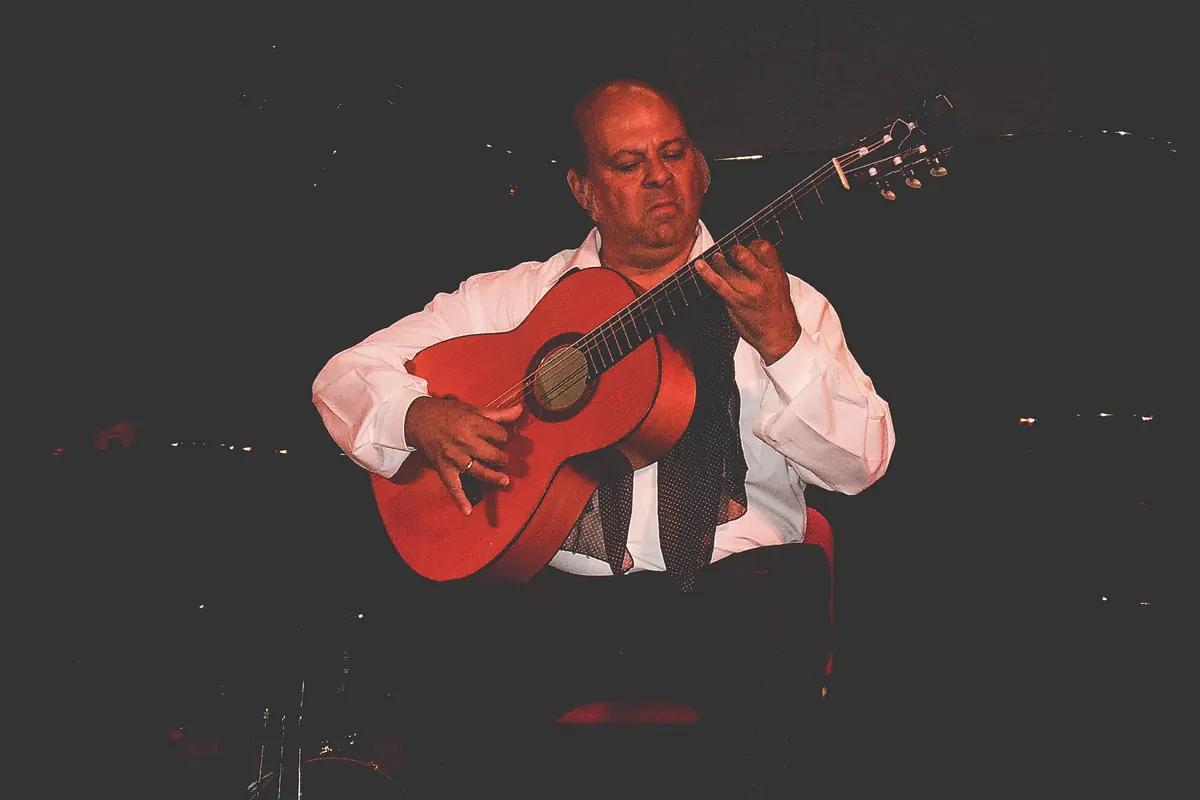
Flamenco guitarists are called tocaores, Wikipedia says, and many use a flamenco guitar, which is lighter and narrower than a classical guitar with a sound suited to accompanying the singer. UNESCO adds that guitar playing has moved beyond accompaniment. Wikipedia lists techniques such as picado, strumming and tremolo. In a show, the guitar sets the key for the singer, marks the rhythm for the dancer and sometimes steps forward alone. The guide to the flamenco guitar and the cajón goes further.
Read next: The flamenco guitar and the cajón
Compás: the cycle that holds it together
Wikipedia calls the compás fundamental to flamenco. It describes it as rhythmic cycles, with 12-beat patterns the most common, and names the bulerías as the emblematic palo. When no guitarist is present, the compás is carried by hand-clapping, called palmas. For a listener, the compás is the repeating pulse that the dancer's feet and the singer's phrases return to. You do not have to count it. Tapping along is optional, and the show will not ask you to.
Jaleo: the voices around the music
Wikipedia describes jaleo as the rhythmic clapping and vocal calls that encourage and support the performers, and calls it an integral part of the art. Calls include olé and así se baila, which means that is the way to dance. Clapping can be hollow, from cupped hands, or sharp, from stiff fingers against the palm, and finger-snapping and foot-stomping count too. The performers on stage often provide it for one another, which is part of why a small show can feel like a conversation.
Frequently asked questions
What are the three strands called?
Cante means song, baile means dance and toque means guitar-playing. UNESCO's entry treats flamenco as the three fused together.
Do I need to know flamenco before a show?
No. A show with dancers, singers and guitarists is built to be watched by anyone. This guide gives you the words so you can follow along.
What is the compás?
The compás is flamenco's rhythmic cycle, most often 12 beats long, according to Wikipedia. Hand-clapping carries it when there is no guitarist.
What is jaleo?
Jaleo is the clapping and calls, like olé, that spur the performers on. Wikipedia calls it an integral part of flamenco.
Sources